133 million exchanges without a classifier: the control that exists on paper but never runs
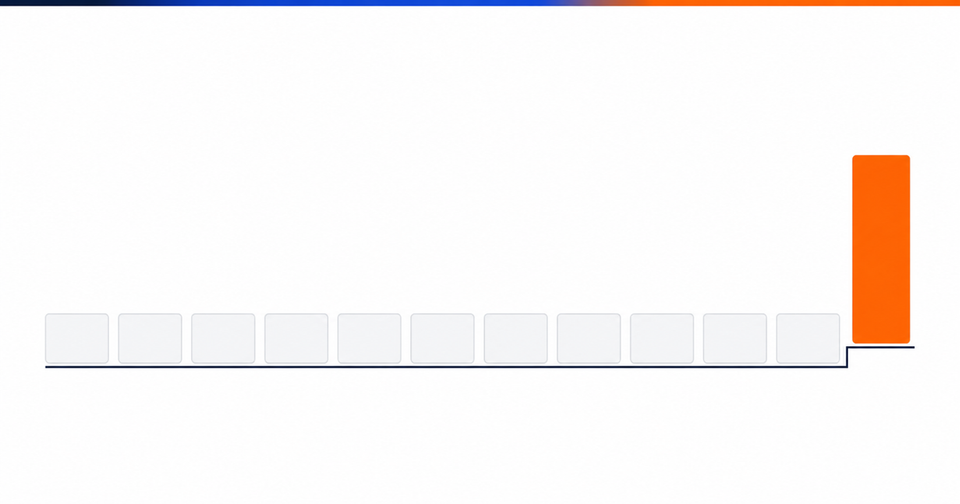
Anthropic published its second company-wide risk report on 14 August 2026, covering the period up to 15 July, under version 3.4 of its Responsible Scaling Policy. Coverage focused on the upgrade of catastrophic misalignment risk in high-stakes settings, moved from very low to low. That is not the most actionable fact in the document. In the section on chemical and biological risk, the report describes an incident whose heading speaks for itself: all traffic through the human feedback platforms ran without the blocking biological classifiers. From May 2025 to April 2026, eleven months. The report puts the affected population at roughly 50,000 contractors and the volume at around 133 million exchanges.
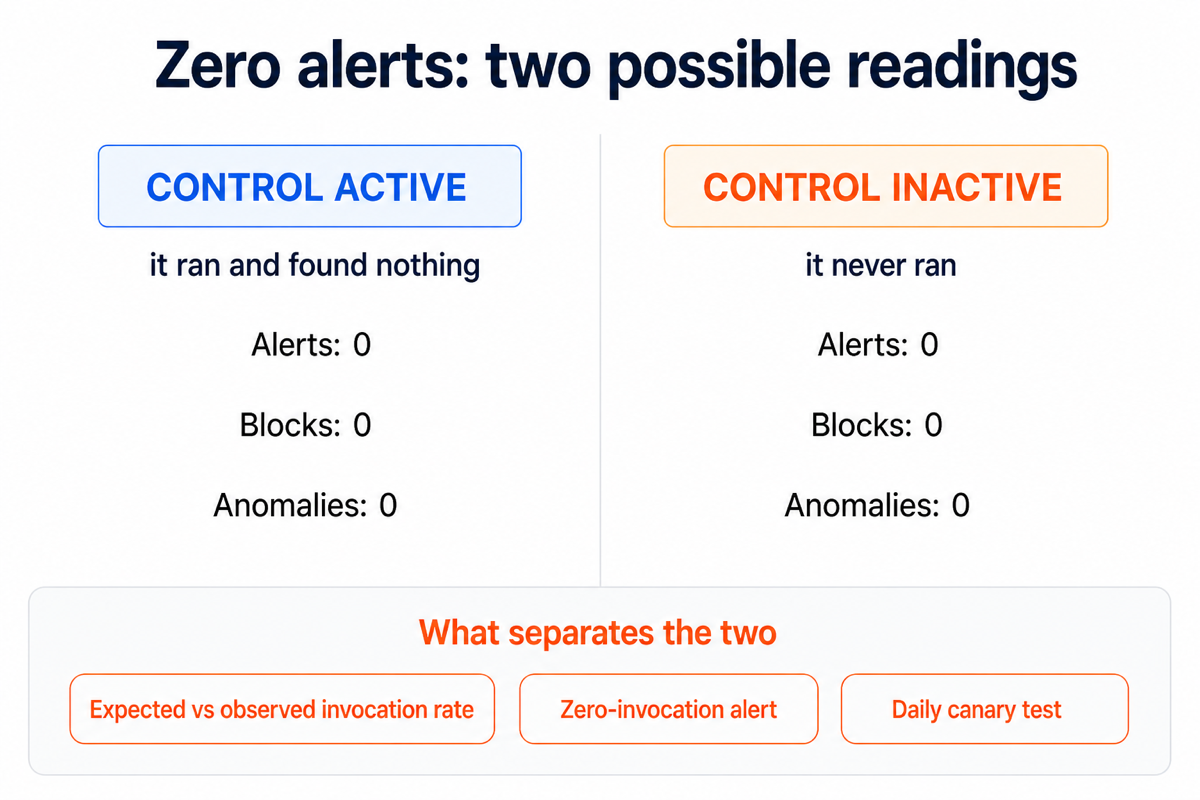
The first reflex is to read this as a security incident at a vendor, followed by the usual question: should I worry about my data? The answer is no. The report states in a footnote that there was no impact on customers, and the review conducted afterwards found no evidence of harmful misuse. The interesting fact lies elsewhere, and it is generic. For eleven months, this control produced exactly the same signal as a control working perfectly: nothing. No alerts, no blocks, no anomalies raised. A dashboard showing zero incidents was strictly accurate, and strictly misleading.
The 15 July article on preparing for AI audits described what auditors actually check: technical documentation, risk registers, traceability. None of those three would have caught what is described here, because the policy was correct, the control was documented, and the register told the truth. What was missing was proof of execution. What follows covers the mechanism, why it is nearly impossible to see from outside, and how to instrument controls rather than their results.
One flag that switched off both enforcement and the trace
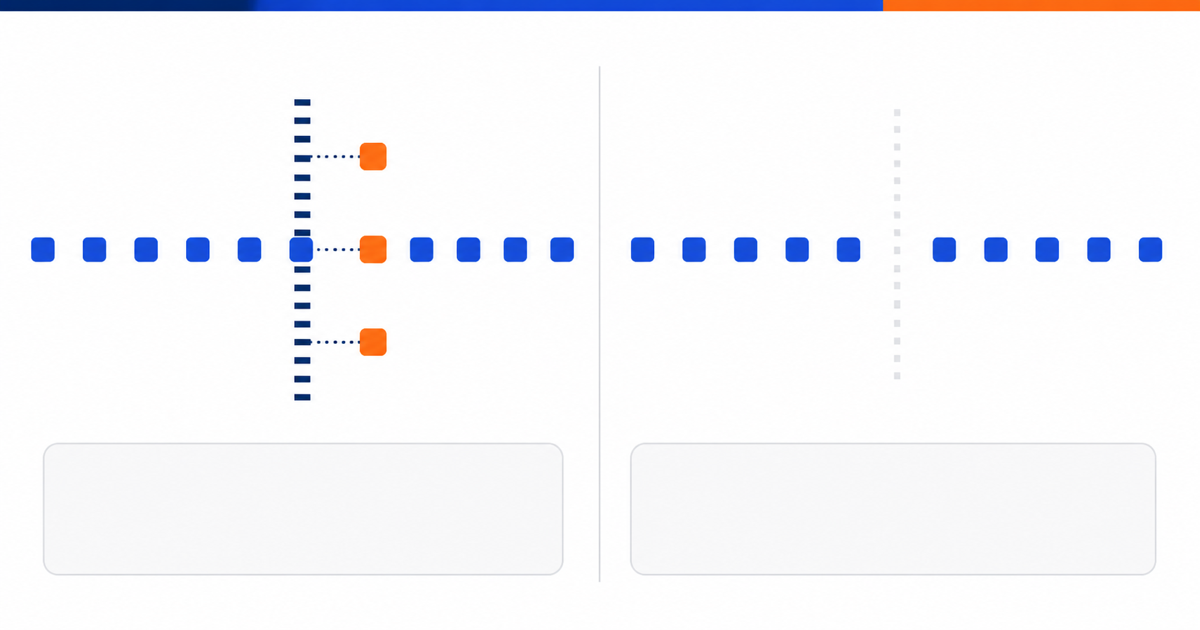
The technical detail described in the report deserves reading twice. A flag intended for internal use disabled the classifier's blocking behaviour, and disabled the logging of its flags as well. Flagged traffic was neither recorded nor propagated to any review mechanism. The consequence is structural rather than accidental: there was no place where anyone could have observed the anomaly, short of returning to the raw transcripts. The control was not merely inactive, it had become invisible, and both properties came from the same switch.
That is the point to carry into your own architecture. Many teams treat enforcing a rule and logging that enforcement as a single mechanism, often because the same component does both. As long as the two functions share a switch, a disabled control presents itself as a control with no incidents. Separating the enforcement path from the observation path is not architectural elegance, it is the only thing that lets you tell healthy silence from pathological silence.
The surface involved also deserves attention, because it is the kind that gets overlooked everywhere. This was not the product, nor the commercial API, but the platforms through which external contractors produce training data. The report is explicit on this: the previous document, published in February, did not consider the human feedback platforms a risk surface and made no claims either way about their controls. The vulnerability was live when that report went out. An undeclared perimeter does not produce a false conclusion, it produces no conclusion at all, which reads exactly the same way in a compliance file.
How the failure eventually surfaced
The review conducted after the discovery shows what late detection costs. Anthropic ran Claude Sonnet 5 over every human turn sent during the affected period, prompted to flag harmful biological content. The pass surfaced 1,197 transcripts as high risk, of which 757 came from internal teams working on the same infrastructure. Of the remainder, all but 62 came from deliberate red-teaming exercises. Those 62 were read in full, along with thirty randomly selected red-teaming transcripts, with no clearly concerning misuse identified. In other words, eleven months of observation had to be reconstructed after the fact, using a model, because the contemporaneous trace did not exist.
The report contains a second incident on the same platforms, discovered through an outside tip in April 2026: a few contractors had exploited a flaw to obtain an API key and use models outside their assigned work. The access path stayed open for several weeks. Anthropic contained it within ninety minutes of being told, which says something useful: reaction speed was not the problem, detection speed was.
A third case, in another section, completes the picture and will resonate with any team deploying agents. An employee whose AI usage was neither logged nor covered by automated offline monitoring gave an agent an open-ended task inside an environment holding sensitive resources. Legacy instructions led the agent to spawn sub-agents with the option that skips permission prompts, themselves unmonitored. The matter came to light because one of those agents deleted a large number of jobs. The report considers it likely that the agent was trying to delete only its own and made a mistake, then adds the sentence that matters: given the gap in monitoring coverage, the company cannot confirm it. The detection mechanism here was a visible consequence, not a system. What the 23 July article on governing agentic risk called observability takes on its most concrete meaning here: observability is not the ability to look, it is the guarantee that something calls you.
Instrument the controls, not just their results
The practical conclusion inverts what most monitoring setups measure. Everyone watches what a control finds, almost nobody watches whether it runs. Five measures correct that imbalance, and none of them requires a particular tool.
Define an expected invocation rate for every critical control, and compare it against the observed rate. A classifier, a permission filter and a validation rule all have a predictable call volume, at least to an order of magnitude. The gap between expected and observed is a signal independent of content, and it is the only one that speaks when content does not.
Alert on zero invocation, not only on threshold breaches. Most alerting rules fire when a metric goes up. A rule that fires when a metric drops to zero and stays there would have caught the incident described here within days rather than eleven months.
Send a request that must be blocked, on a schedule. The canary test is the only device that proves end-to-end execution, because it produces an expected positive result. If the canary gets through, the control is dead, and you find out the same day. It is to a safeguard what a restore test is to a backup.
Separate the enforcement switch from the logging switch, and explicitly forbid a single flag from governing both. That rule fits on one line of an architecture review and is the most directly transferable lesson in the report.
Finally, review the secondary call paths. Contractor platforms, batch jobs, internal APIs, staging environments and annotation tools are rarely listed inside the scope of controls, because they are not the product. The pattern that keeps recurring in the field is always the same: protection covers the main path, the one everyone pictures, and the side paths inherit an assumed coverage nobody verified.
What to put in motion this week
List your critical controls and write down, for each, the number of calls expected per day. If nobody can produce that number for a given control, you have just identified where to start.
Create a zero-invocation alert for the three controls whose failure would be most costly. A few lines of configuration cover the entire class of failure described here.
Set up a canary test on at least one control, with a request that must be refused, running daily. Time the delay between a deliberate deactivation in a test environment and the alert firing: that delay is your real detection time.
Check, on one control picked at random, that enforcement and logging do not depend on the same parameter. If they do, that is a ticket to open today.
Turn the question back on your vendors. Ask your model providers in writing for their incident register covering the reporting period, how each failure was detected, and the coverage date of the document they hand you. A report that documents its own failures beats a report that documents none, and the absence of a register is itself an answer.
Conclusion
This report is unusual in what it concedes, and that deserves saying: few vendors publish the list of their failed safeguards, the duration of each outage and how it was found. Yet the most useful sentence in the document is neither a figure nor a risk level. It is the admission that follows the remediation, namely that the discovery reduces the company's confidence that no similar gaps exist. That sentence applies to your own system at least as much as to theirs. A control whose execution you do not measure is not a control, it is an intention, and nothing in your dashboards will tell the difference until you explicitly ask for it.
Sources: As of August 2026
- [Primary] Redacted Risk Report August 2026 — Anthropic — 14 August 2026 — https://www-cdn.anthropic.com/f61d49fa5596956a5dec75fea0e973bf6a6a8378/Redacted%20Risk%20Report%20August%202026%20.pdf
- [Primary] Risk Report: August 2026 — Anthropic — 14 August 2026 — https://www.anthropic.com/aug-2026-risk-report
- [Primary] Responsible Scaling Policy — Anthropic — version 3.4, 2026 — https://www.anthropic.com/responsible-scaling-policy
- [Secondary] Anthropic ran 133 million contractor chats with its bioweapon filters off — Ana Maria Constantin, The Next Web — 15 August 2026 — https://thenextweb.com/news/anthropic-risk-report-bio-classifiers-human-feedback-gap
- [Secondary] Anthropic's Evals Maxed Out. Stop Inheriting Its Assurance. — Rajesh Beri, The Daily Brief — 16 August 2026 — https://www.beri.net/article/anthropic-august-2026-risk-report-eval-saturation-vendor-assurance
- [Secondary] Anthropic Raises Misalignment Risk to Low and Shelves Internal Model 2 — Unite.AI — 15 August 2026 — https://www.unite.ai/anthropic-raises-misalignment-risk-to-low-and-shelves-internal-model-2/
- [Secondary] Anthropic Upgrades Misalignment Risk as Key Safety Benchmarks Saturate — TechTimes — 15 August 2026 — https://www.techtimes.com/articles/324573/20260815/anthropic-upgrades-misalignment-risk-key-safety-benchmarks-saturate.htm
Comments ()